
Research Team
Group Leader

Aitzol Garcia-Etxarri
Kaixo!!
I am an Ikerbasque Research Fellow at the Donostia International Physics Center (DIPC) in San Sebastian, Spain. I am an expert in nanoscience, with a strong interest in the benefits of nanoscale light-matter interactions applied to biological problems and quantum applications.
I graduated with a PhD in Physics in 2010 from the University of the Basque Country, advised by Javier Aizpurua, and Pedro Miguel Echenique. From 2011 to 2015 I served as a postdoctoral researcher at Stanford University in Jennifer Dionne’s lab. In 2014, I obtained a Fellows Gipuzkoa Fellowship to start my career as an independent scientist in the Basque Country (Spain) at the DIPC. From 2019, I am an Ikerbasque Research Fellow at the DIPC where I lead this diverse research group of amazing people.
email: aitzolgarcia@dipc.org
Bachelor’s and Master’s students
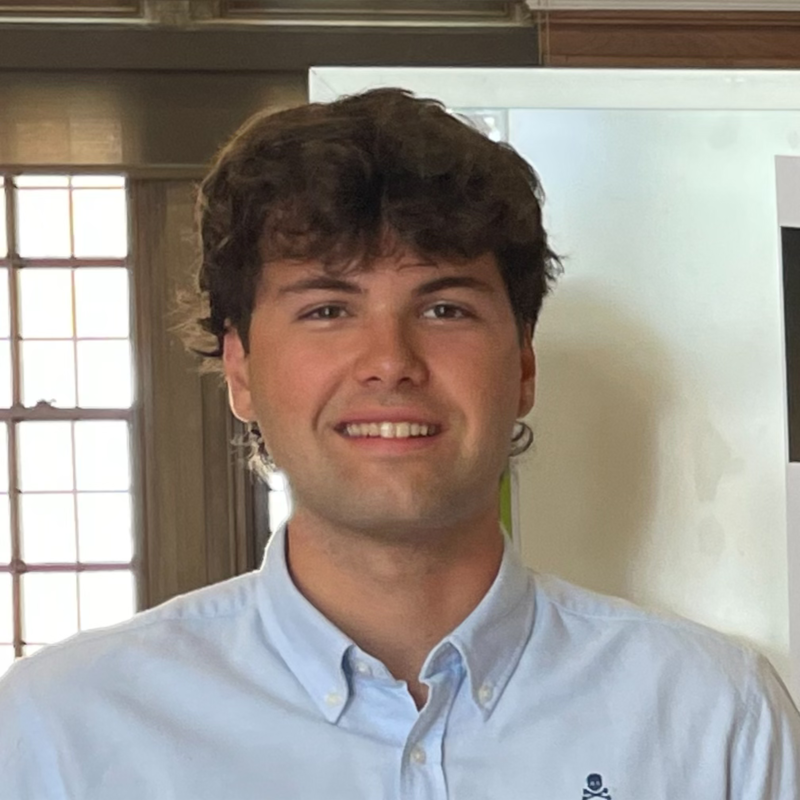
Julio Herreros GArcía
Julio worked as a bachelor’s student during a summer internship on the chiral interaction of light and matter at the nanoscale to detect the chirality of molecules with higher precision, he is currently developing his bachelor’s thesis in the group.
Ph.D. Students

Antonio Morales Pérez
Co-advised with Maia Garcia Vergniory (DIPC)
email: antonio.morales@dipc.org

Carolina Martínez Strasser
co-advised with Dario Bercioux (DIPC)
Ph.D. student working on non-Hermitian quantum mechanics for both bosons and fermions.
Carolina has a background in Nanoscience and Nanotechnology from the Autonomous University of Barcelona and a Master’s degree in quantum science and technology from the University of the Basque Country.
email: carolina.martinez@dipc.org
Postdoctoral researchers

Galder Llorente
Co-advised with Mónica Carril (Intituto Biofisika, Basque Country)
Galder Llorente is a Postdoctoral Fellow in the Aitzol García's group and Mónica Carril's group. His research focuses on functionalization of nanoparticles targeted to neural binding receptors. Galder is an expert in the synthesis and functionalization of complex molecules and their application for biochemical purposes. He received his Bachelor of Science in Chemistry in 2016, a Master in Synthetic and Industrial Chemistry in 2017, and a PhD in Chemistry at the University of the Basque Country (UPV/EHU) in 2023
email: galder.llorente@dipc.org

María Isabel Ardaya
co-advised with Abraham Martin (Achucarro, Basque Country)
email: mariaisabel.ardaya@ehu.eus
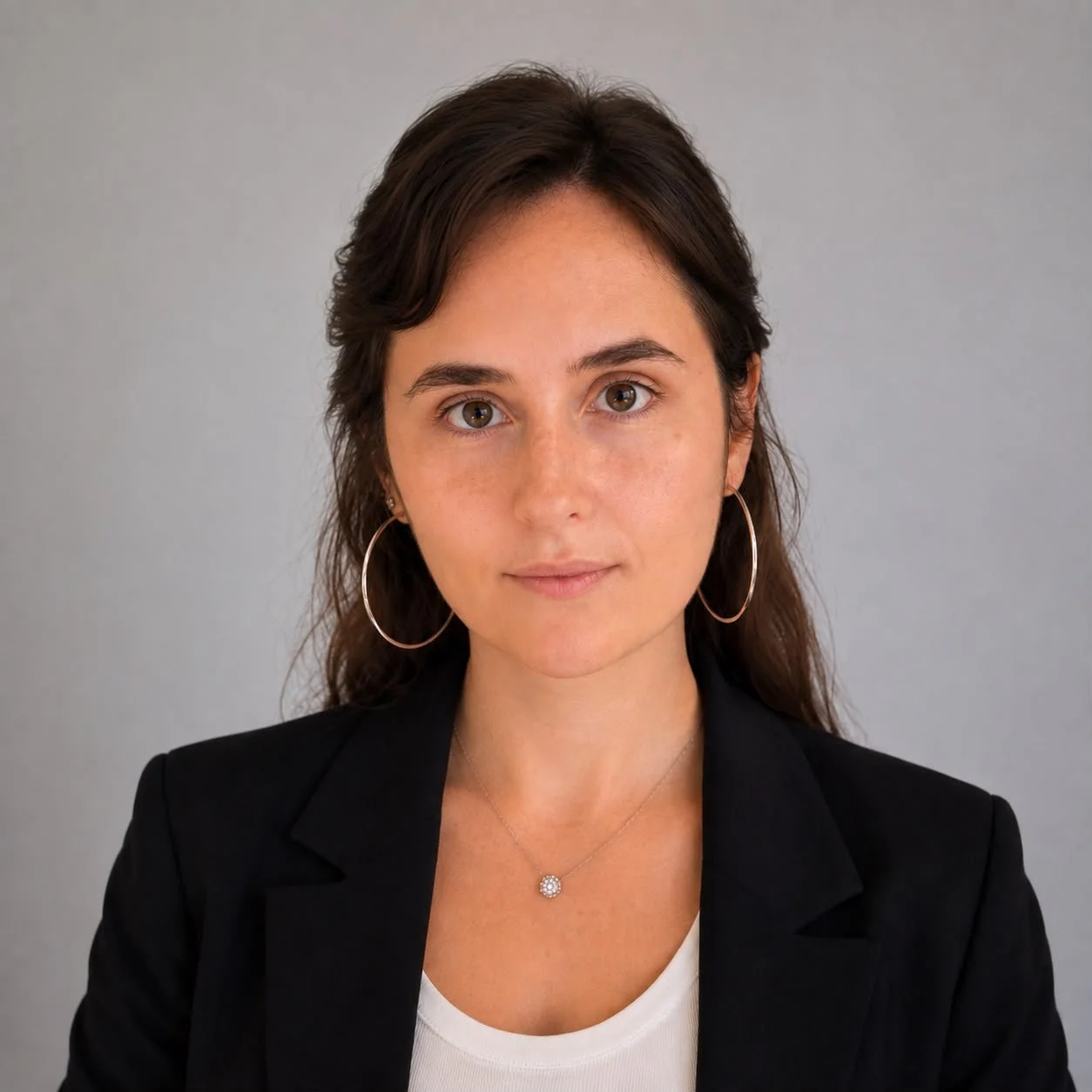
Teresa Itziar Celaya Garmendia
Co-advised with Rafael Yuste (Columbia University, NY, USA)
Teresa completed her PhD in 2026. Her research focused on plasmonic nanoparticle-mediated neuromodulation, combining nanophotonics and electrophysiology to investigate how light-induced local heating can modulate neuronal activity. She is now continuing in the group as a postdoctoral researcher, working at the interface of nanotechnology, photonics and neuroscience.
email: teresa.celaya@dipc.org
Alumni
Bachelor’s and Master’s students

Edurne Saenz Párraga
Edurne developed her Master Thesis, entitled “Machine learning applied to nanophotonics” in our group. She graduated in September 2022.
email: edurne.sp.95@gmail.com
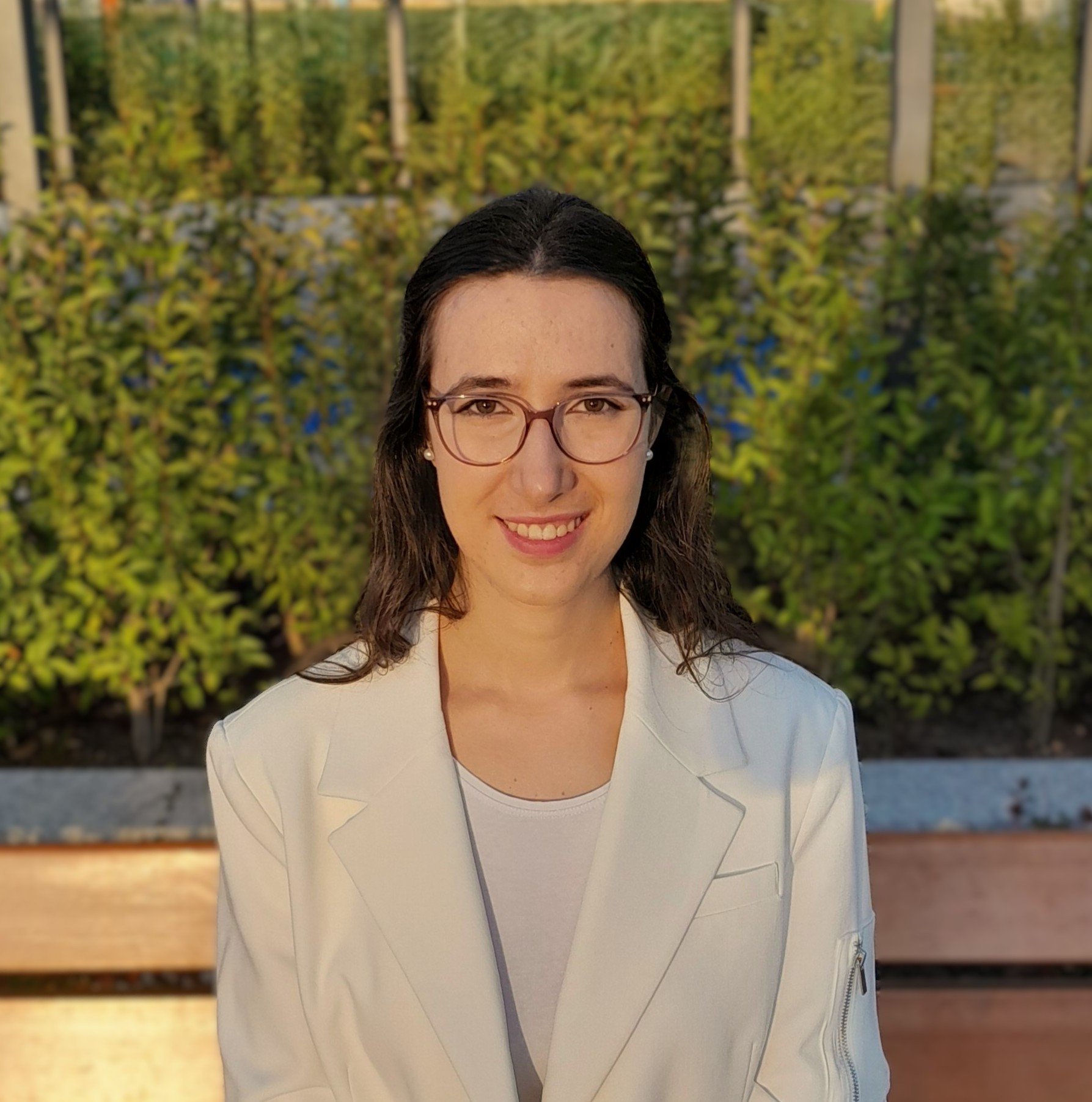
Celia Rodríguez
Co-advised with Daniel Jaque (Universidad Autónoma de Madrid)
Celia developed her Master’s Thesis entitled “Semiconductor nanocrystals for intracellular temperature sensing“ in ur group. She graduated in 2026.
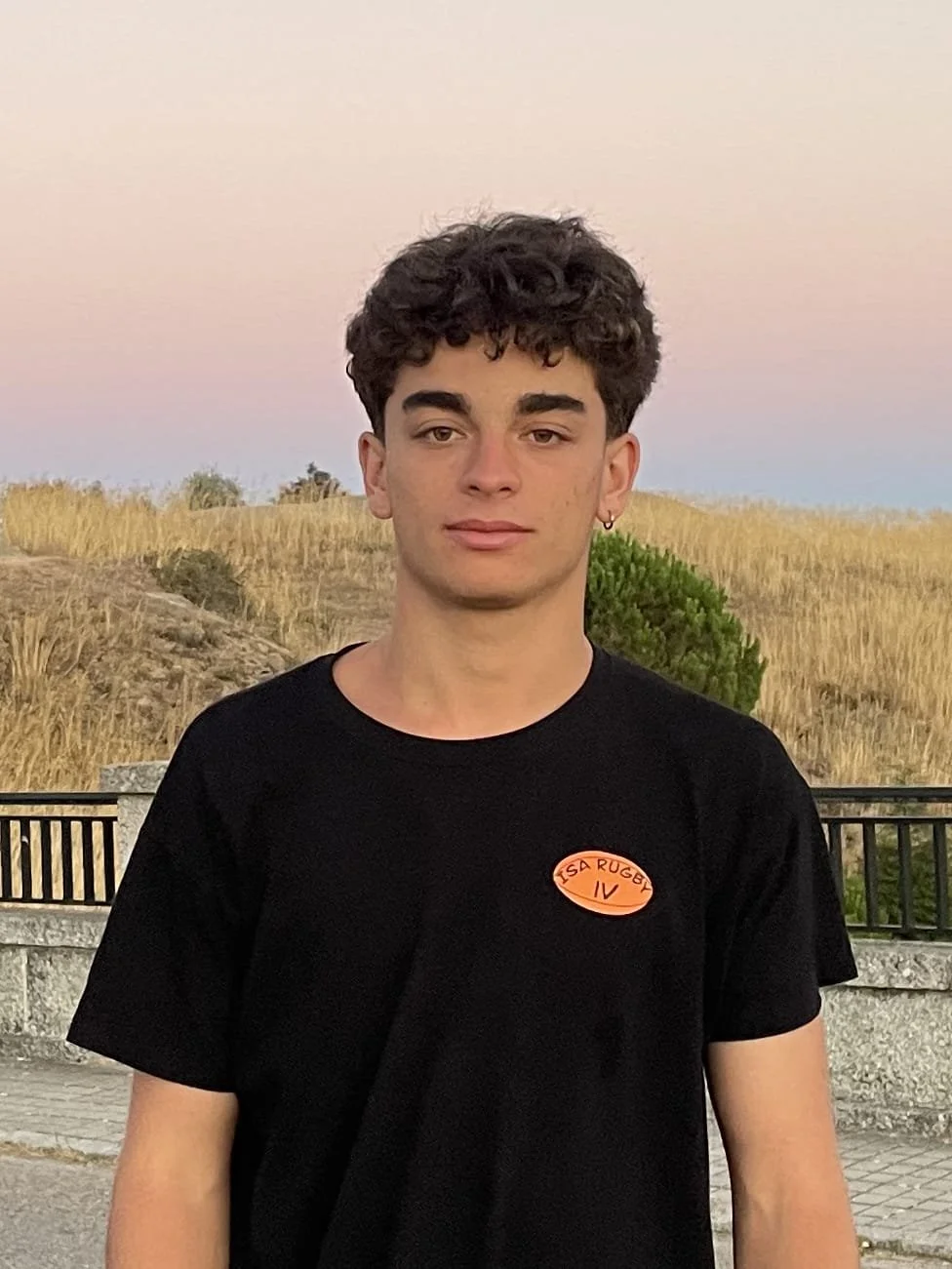
Aitor García Hombrados
Aitor worked as a bachelor’s student in the NanoNeuro team during a summer internship, where he used Monte Carlo simulations to model light propagation in biological tissue.
Ph.D. Students

María Blanco de Paz
co-advised with Paloma Arroyo Huidobro (Universidad Autonoma de Madrid)
MAría completed her PhD in 2022. Her research focused on the design and topological characterization of two-dimensional photonic crystals, developing methods based on topological invariants and group theory to identify and engineer different topological phases . Her work included photonics crystals with obstructed atomic limit character and the theoretical design of the first 2D photonic crystal model exhibiting fragile topology. Her thesis received the International Doctorate distinction.
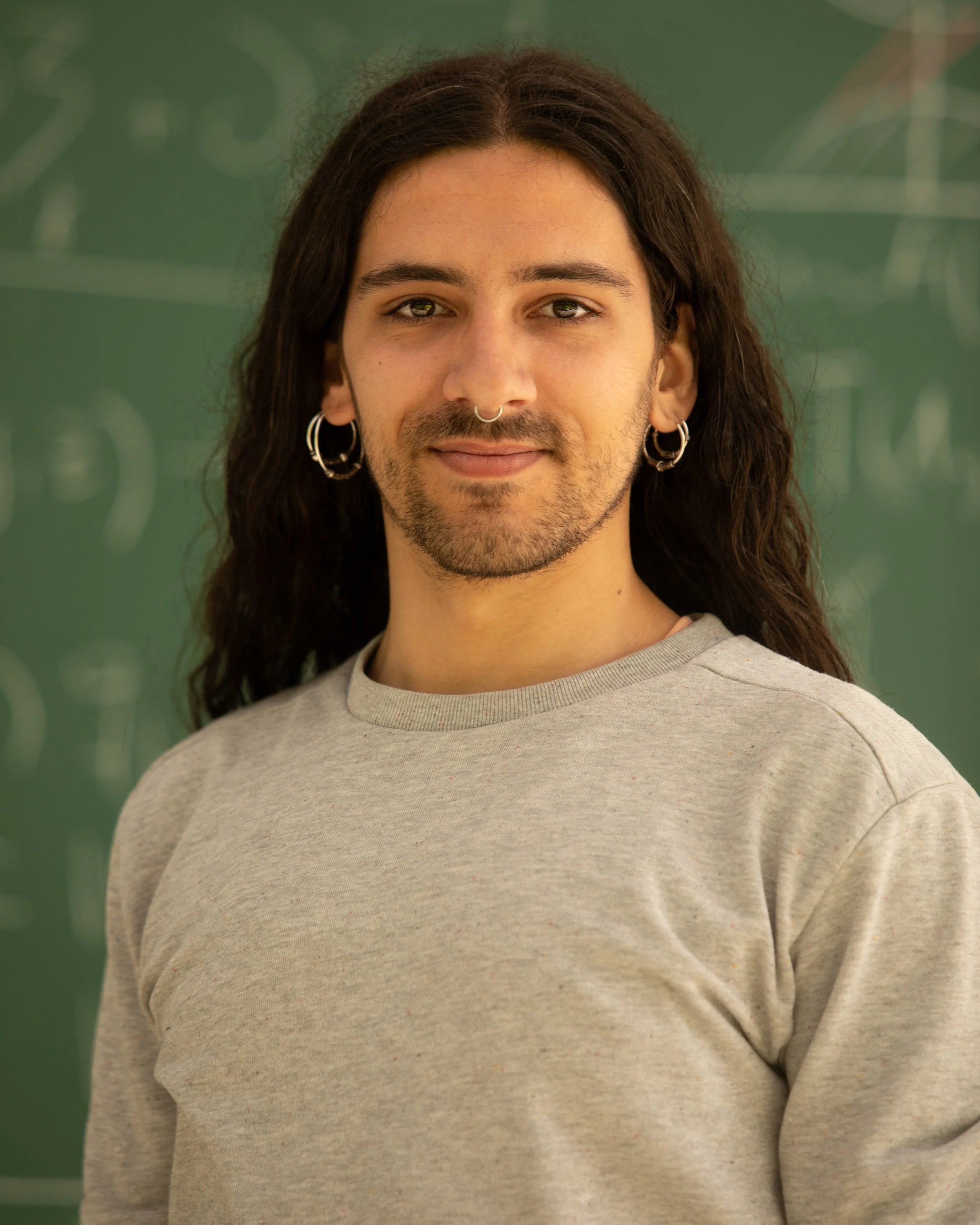
Miguel Angel JImenez Herrera
co-advised with Dario Bercioux (DIPC)
Miguel Angel completed his PhD in 2024. His research focused on the quantum simulation of two-dimensional electronic lattices and on understanding the structural and electronic properties of nanostructures.

Chiara Devescovi
co-advised with Maia Garcia Vergniory (DIPC)
Chiara completed her PhD in 2023. Her research focused on ·d topological photonic crystals, developing theoretical tools to characterize and design novel topological phases of light and exploring their potential applications in photonics and quantum technologies.

Jon Lasa Alonso
co-advised with Gabriel Molina-Terriza (CFM, Donostia)
Jon completed his PhD in 2023. His research focused on space-time symmetries in classical and quantum electromagnetic scattering, using group theory to study phenomena including light helicity, Kerker effects, and the interaction of multiphoton states with electromagnetic scatterers. His thesis received the International Doctorate distinction.
email: jonqnanolab@gmail.com
Postdoctoral researchers
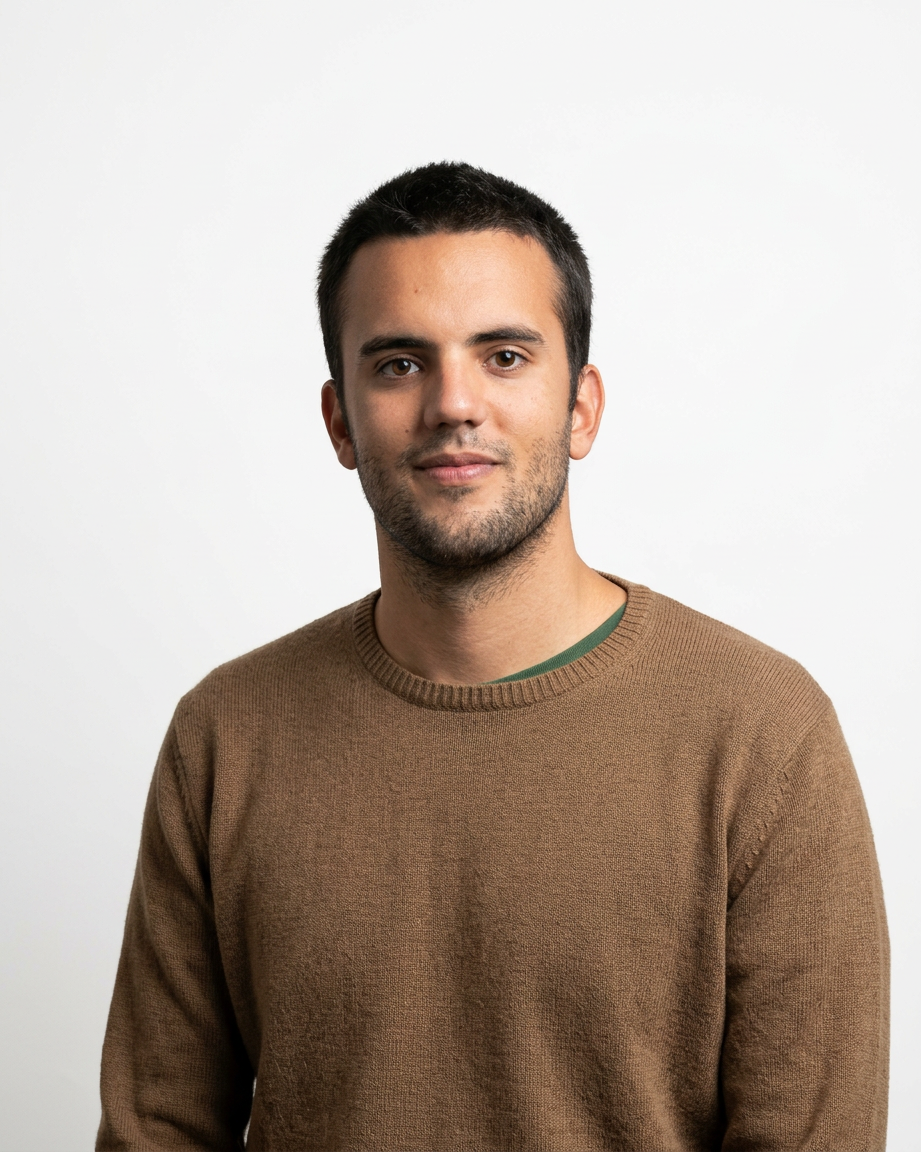
Jorge Olmos Trigo
co-advised with Anton (Universidad Autonoma de Madrid)
Jorge was a postdoc in our group working on light-driven nanoscale chiral forces. Currently he is a Juan de la Cierva Fellow in Gabriel Molina Terriza’s group at CFM-CSIC.
email: jolmostrigo@gmail.com

German Pieslinger
co-advised with Eider San Sebastian (EHU, Kimikako Fakultatea, Donostia)

Javier Alfaro Mozaz
co-advised with Abraham Martin (Achucarro, Basque Country)
Dr. Javier Alfaro Mozaz graduated in physics from the University of Zaragoza, and developed his PhD in nanophotonics in Rainer Hillenbrand's group (CIC Nanogune), under his supervision and that of Prof. Alexey Nikitin (DIPC), studying the nanophotonics of two-dimensional hyperbolic materials.
During two years, under the supervision of Rafael Yuste (Columbia University) and Aitzol García Etxarri (DIPC), he studied the thermoplasmonic effect in the continuous and ultrafast regime, in nanoantennas and arrays of gold nanoantennas. For six months, he performed electrophysiology experiments in Rafael Yuste's laboratory at Columbia with a Fulbright grant.